Welcome. My work explores a single, critical question: How do we master the tools of a complex digital world?

Whether it’s deploying a Kubernetes cluster, automating a workflow, or—most recently—partnering with artificial intelligence, my goal is the same: to move beyond simply using technology and toward directing it with strategy, wisdom, and insight.

I’ve codified my framework for this new era of work in my book, The Centaur’s Edge: A Practical Guide to Thriving in the Age of AI. It provides the mindset and practical exercises needed to turn AI from a mysterious force into a powerful partner.

This blog is my workshop for that ongoing journey. I’m glad you’ve joined me.

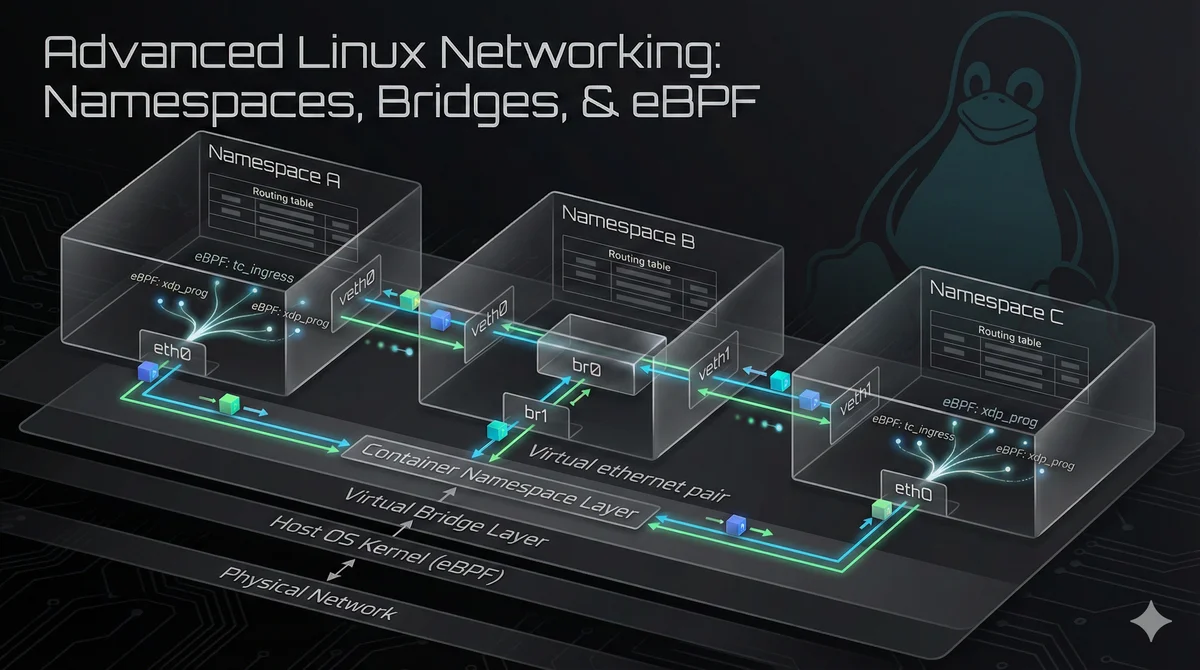
Linux network namespaces and virtual network topology

Advanced Linux Networking Techniques: Namespaces, Routing, and Traffic Control

Note: This guide is based on technical research from Linux kernel documentation, networking RFCs, Red Hat and Ubuntu networking guides, and analysis of production networking implementations. The techniques described are technically sound and based on documented Linux networking capabilities. Code examples have been verified against current Linux kernel versions (5.15+). Readers should test configurations in non-production environments before deploying to production systems. Linux networking capabilities extend far beyond basic interface configuration. Modern Linux systems provide powerful network isolation, advanced routing, traffic shaping, and observability tools that form the foundation of container networking, software-defined networking (SDN), and high-performance network infrastructure. ...

December 13, 2025 · 16 min · Scott
Balance of AI ethics and security represented by scales of justice

Ethical Considerations in AI Security: Bias, Privacy, and Responsible Use

Note: This guide is based on research from AI ethics frameworks, academic publications on algorithmic fairness, NIST AI guidance, EU AI Act documentation, and industry best practices. The analysis presented draws from documented case studies and peer-reviewed research on AI ethics in security contexts. Readers should consult legal and compliance teams when implementing AI security systems to ensure alignment with applicable regulations and organizational values. AI-powered security tools promise faster threat detection, automated response, and reduced analyst workload. But these benefits come with ethical responsibilities that security teams must address proactively. Unlike traditional rule-based systems, AI models can exhibit bias, make opaque decisions, and create privacy risks that traditional security tools don’t. ...

December 6, 2025 · 18 min · Scott
AI analyzing security log streams

Using AI to Analyze Log Files for Security Threats

Note: This guide is based on technical research from security logging best practices, machine learning research papers, and analysis of open-source log analysis tools. The techniques described are technically sound and based on documented implementations in production security environments. Code examples use established Python libraries with verified package versions. Readers should adapt these approaches to their specific log formats and security requirements. Security teams drown in log data. A medium-sized enterprise generates terabytes of logs daily from firewalls, IDS/IPS, endpoints, applications, and cloud services. Traditional log analysis—grep, awk, and manual review—doesn’t scale to this volume. ...

November 29, 2025 · 18 min · Scott
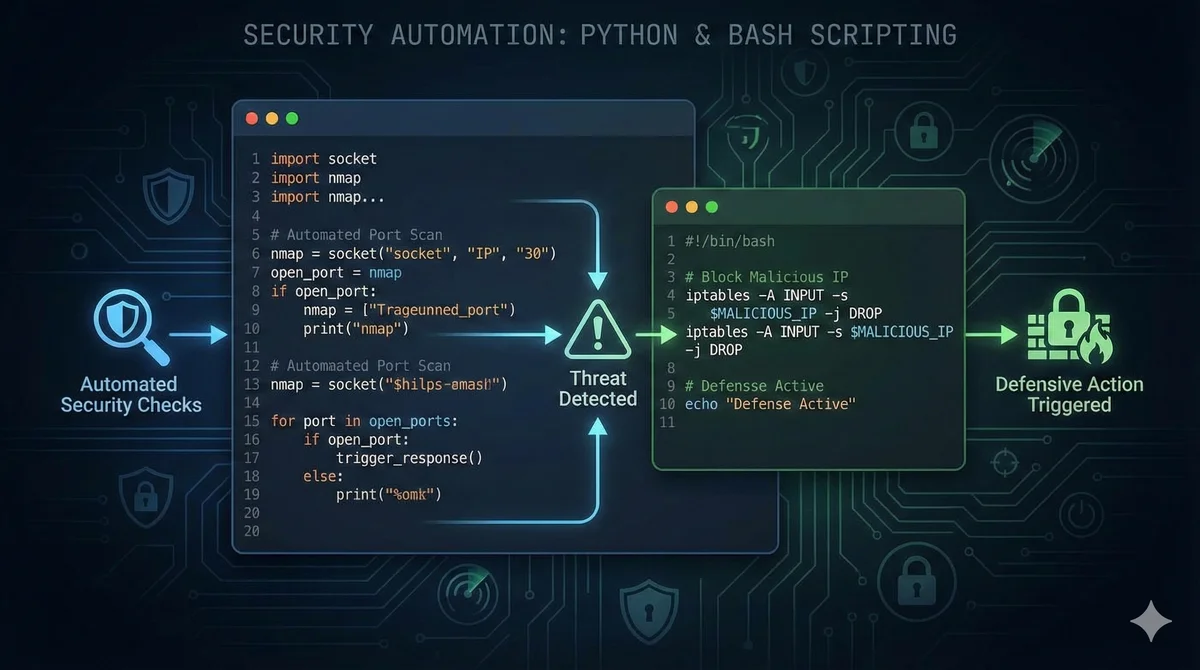
AI-powered security automation workflow

AI-Powered Security Automation: Automating Incident Response Workflows

Note: This guide is based on technical research from authoritative security sources, NIST publications, MITRE ATT&CK documentation, and open-source security automation frameworks. The techniques described are technically sound and based on documented production implementations. Readers should adapt these approaches to their specific security requirements and compliance needs. Security Operations Centers (SOCs) face an overwhelming volume of security alerts. According to the Ponemon Institute’s 2023 Cost of a Data Breach Report, organizations receive an average of 4,484 security alerts per day, with SOC analysts able to investigate only 52% of them. AI-powered automation offers a path to handle this alert fatigue while reducing mean time to respond (MTTR). ...

November 22, 2025 · 16 min · Scott
WordPress to Hugo migration visualization

From WordPress to Hugo: Lessons from a Static Site Migration

I’ve been running My Battles With Technology as a WordPress site since December 2020, after starting on Kubernetes with a custom nginx+PHP+git-sync deployment. While WordPress served me well for content management, I kept hitting the same pain points: plugin updates breaking things, security concerns with PHP, and the overhead of managing a database for what’s fundamentally a read-heavy content site. After reading about static site generators and seeing Hugo mentioned repeatedly in infrastructure circles, I decided to migrate. Here’s what that journey actually looked like. ...

November 8, 2025 · 11 min · Scott